0 avis
Exclusive: Beyond the notorious prison cells in Iraq’s Abu Ghraib
Edité par France 24
In 2004, one year after the American invasion of Iraq, disturbing images of naked Iraqi prisoners piled on top of each other began to do the rounds of international media. Other detainees were depicted hooded and wired up with electrodes. All to the amusement of American soldiers. This was the beginning of the Abu Ghraib prison scandal that would eventually force a red-faced Bush administration to issue a public apology for the behaviour of Iraqi-deployed US forces.
More than a decade later, the institution remains the symbol of the American invasion and the torture that took place there has frequently featured in jihadist propaganda. The prison has often been identified as the birthplace of the Islamic State group.
On July 21, 2013, long after the operation of Abu Ghraib had returned to the Iraqis, a terrorist attack of unprecedented level hit the prison, resulting in more than 500 detainees fleeing the compound. Some of the escapees are believed to have joined the al-Qaeda branch that was behind the jailbreak and which would later grow into today’s Islamic State group.
Although the Abu Ghraib prison was shut down in 2014, Baghdad authorities are now mulling reopening it. Our reporters were granted exclusive access into the notorious, but now abandoned, prison grounds. But the stigma of the past remains very much present.
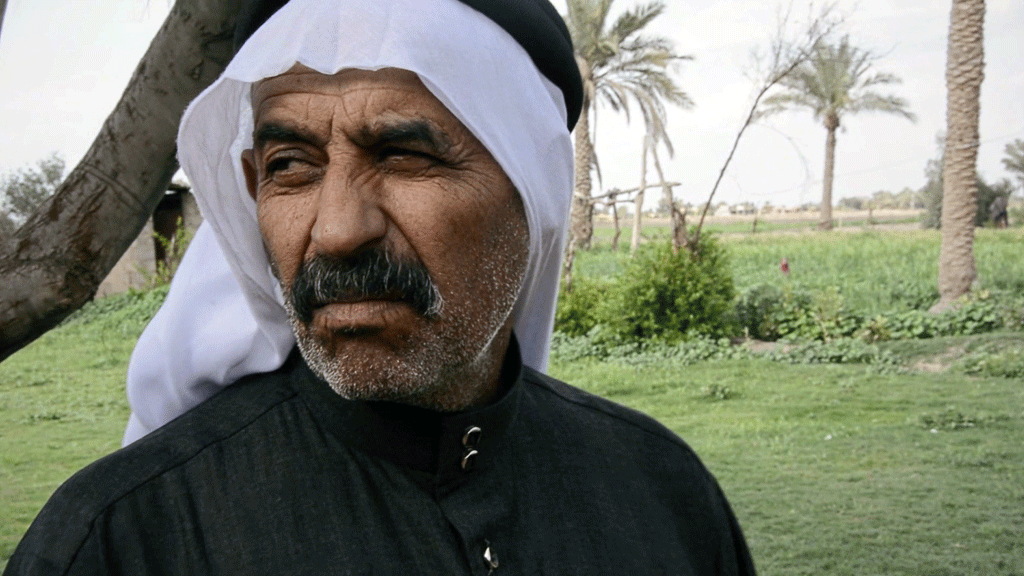
Our reporters also spoke to surrounding residents, whose lives and destinies seem undeniably linked to the prison. Many of them dream of just living an ordinary life, but the history of the prison -- and the increasing terror threat -- are inhibiting factors as they try to get on with their lives.